
A refrigerator problem can turn urgent fast. Milk warms up, produce wilts, frozen food begins to soften, and a normal weekday suddenly becomes a scramble. When you need refrigerator repair, the goal is not just to stop an annoying noise or clear a warning light. It is to protect your food, restore your routine, and get a clear answer about what is wrong.
Some refrigerator issues have a simple cause you can safely check at home. Others involve electrical components, sealed cooling systems, or water connections that need an experienced technician. Knowing the difference can save time, prevent further damage, and help you make a confident decision.
When Refrigerator Repair Cannot Wait
A refrigerator should keep the fresh-food compartment at or below 40°F. If it feels warm, the interior light is on but the unit is not cooling, or the freezer is thawing, treat the issue as time-sensitive. Do not assume it will correct itself overnight. A refrigerator that cycles on but does not cool may have a failed fan, dirty condenser coils, a faulty control, or a more involved cooling-system problem.
Water on the floor also deserves prompt attention. A blocked defrost drain can cause puddling inside or beneath the refrigerator, while a loose water line, damaged filter housing, or ice maker problem can create a leak behind the unit. Even a small leak can damage flooring, cabinetry, and nearby walls if it continues unnoticed.
Unusual sounds are another reason to schedule service. A brief hum or occasional ice drop is normal. Repeated clicking, loud buzzing, grinding, rattling, or a fan-like scraping sound is not. The sound may come from a condenser fan, evaporator fan, compressor relay, or ice maker. The exact source matters, which is why a technician should diagnose the appliance rather than replace parts based on a guess.
A refrigerator can also be cooling unevenly. If the freezer is cold but the refrigerator compartment is warm, airflow may be blocked by frost, food placement, or a failed evaporator fan. If one area freezes food while another stays too warm, a sensor, damper, or control issue may be involved.
Safe Checks to Make Before You Call
Start with the basics, but do not take apart panels or handle electrical components. Confirm that the refrigerator is firmly plugged in and that the outlet has power. Check your home’s breaker panel if the appliance is completely unresponsive. If the refrigerator has an electronic control panel, make sure it was not accidentally set to a higher temperature or placed in a special cooling mode.
Next, look at the door seals. A torn, loose, or dirty gasket can let warm air into the refrigerator and force it to run longer. Close a sheet of paper in the door at several spots. If it slides out with no resistance, the seal may not be closing properly. Also make sure food containers are not preventing the door from shutting all the way.
Give the appliance room to breathe. Boxes packed tightly against interior vents can limit airflow, and dust-covered condenser coils can make it harder for the refrigerator to release heat. If your owner’s manual permits it and the coils are accessible, carefully vacuum loose dust after unplugging the unit. Avoid bending fins, pulling on wires, or moving a heavy refrigerator without help.
For an ice maker issue, check that the water supply valve is open and that the filter is not overdue for replacement. A frozen fill tube, damaged inlet valve, or faulty ice maker assembly still requires professional attention, but these simple checks can rule out a basic supply problem.
Protect Food While Cooling Is Down
Keep refrigerator and freezer doors closed as much as possible. An unopened refrigerator generally keeps food cold for about four hours during a power outage or cooling failure. A full freezer can hold a safe temperature for about 48 hours, while a half-full freezer holds it for roughly 24 hours. These time frames depend on room conditions and how often the doors are opened, so use a thermometer when possible rather than relying on touch alone.
Move high-risk refrigerated foods to a cooler with ice if the refrigerator has been above 40°F for more than two hours. This includes meat, poultry, seafood, eggs, milk, leftovers, and cut fruits or vegetables. When in doubt, throw it out. Food that smells normal can still be unsafe after sitting too warm for too long.
If freezer items still contain ice crystals or have remained at 40°F or below, they can usually be refrozen or cooked. Write down when you first noticed the cooling issue. That information helps a technician understand whether the failure was sudden, intermittent, or developing over time.
What Professional Refrigerator Repair Includes
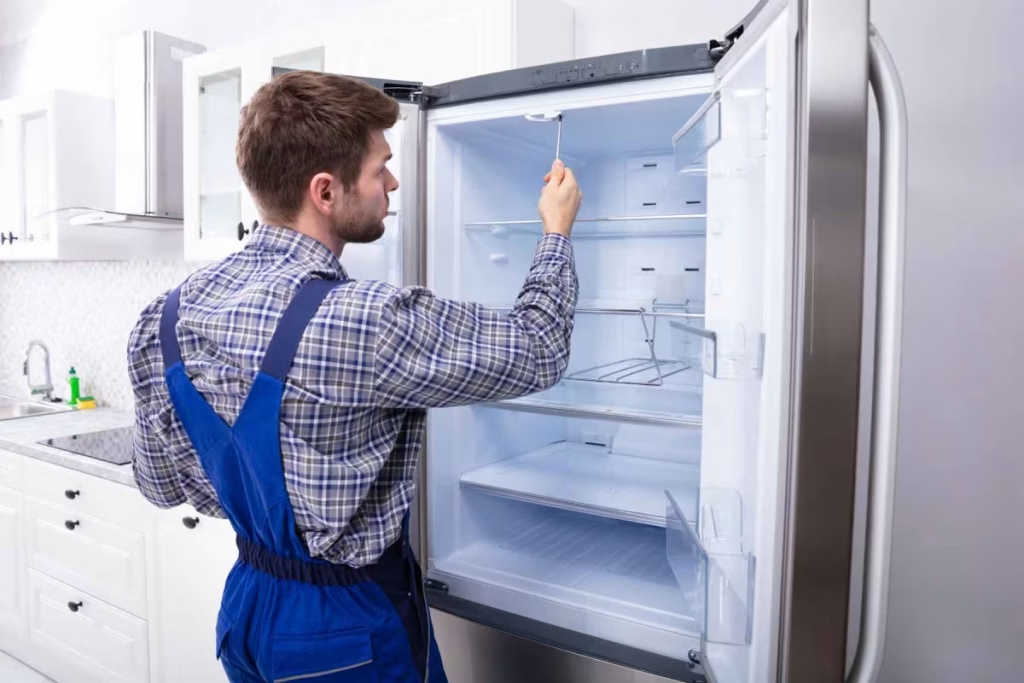
A skilled technician does more than confirm that the refrigerator is not cold. The diagnostic process looks at the appliance as a system: power supply, compressor operation, fans, temperature sensors, defrost components, air circulation, controls, door seals, and water connections when applicable.
For example, a refrigerator that clicks but will not start may need a start relay, but it could also point to a compressor issue. A refrigerator with a heavy frost buildup may have a defrost failure, yet the underlying cause could be a heater, thermostat, sensor, control board, or wiring connection. Replacing the wrong part can add cost without solving the problem.
A good service visit should give you a plain-language diagnosis and an upfront estimate before work begins. You should know what part is being recommended, why it is needed, and what the repair is expected to address. Blue Shield Appliance sends insured, vetted technicians to homes across Arlington and the DMV, with same-day or next-day scheduling available for many service needs.
Is Refrigerator Repair Worth It?
In many cases, yes. A failed fan motor, door gasket, water inlet valve, ice maker component, thermostat, sensor, defrost part, or control board can often be repaired for far less than the cost and disruption of replacing the whole appliance. Repair is especially sensible when the refrigerator is relatively new, otherwise in good condition, and has the capacity or features your household relies on.
Replacement may make more sense when an older unit has a major sealed-system or compressor failure, needs multiple expensive repairs, or has a history of recurring breakdowns. The age, brand, model, part availability, energy use, and total repair estimate all matter. There is no honest one-size-fits-all answer. A technician can explain the trade-off so you can choose based on the appliance’s condition and your budget.
For landlords and property managers, a timely repair can also prevent a small maintenance call from becoming a tenant emergency. Documenting the diagnosis and completing the repair quickly helps protect the property and keeps residents from losing groceries.
What to Expect at Your Appointment
Before the technician arrives, clear a path to the refrigerator and remove items from the top of the unit if possible. If the issue involves a leak, place towels around the area and avoid pulling the refrigerator away from the wall unless it can be done safely. Have the model number ready if you can find it, usually on an interior wall or door frame. It helps identify compatible parts, though a technician can locate it during the visit if needed.
During the appointment, explain when the problem began and whether it is constant or intermittent. Mention recent power outages, moves, filter changes, strange sounds, error messages, or changes in cooling performance. Small details often narrow down the diagnosis.
After the inspection, review the estimate before authorizing work. A professional should respect your home, protect the work area, answer questions clearly, and test the refrigerator after the repair whenever the repair allows. For parts that must be ordered, you should understand the next step and expected scheduling process.
Prevent Problems Before They Interrupt Your Week
Refrigerators work around the clock, so a little routine care goes a long way. Keep door gaskets clean, avoid blocking air vents with large containers, replace water filters on schedule, and clean accessible condenser coils as recommended by the manufacturer. Do not overload the refrigerator, but do keep it reasonably full. Food helps stabilize temperatures and reduces how hard the appliance must work after the door opens.
Pay attention to early warning signs such as longer run times, inconsistent temperatures, frost where it does not belong, reduced ice production, or water near the base. Scheduling service while the refrigerator is still operating can be less stressful than waiting for a complete failure.
If your refrigerator is warm, leaking, noisy, or simply not keeping food at a safe temperature, act early. A clear diagnosis and timely repair can get your kitchen back to normal before a manageable appliance problem becomes a costly disruption.