
A washer that will not drain can turn one load of laundry into a sink full of water, wet clothing, and a disrupted evening. Washer not draining problems are often caused by a simple blockage or hose issue, but they can also point to a failing pump, lid switch, or household plumbing backup. The key is knowing what you can safely check before water spreads across the laundry room.
What Washer Drain Problems Usually Look Like
Washer not draining issue always looks the same. Your washer may stop before the spin cycle, leave clothes soaking wet, display an error code, make a humming sound without moving water, or leak from behind the machine. A front-load washer may also keep its door locked because it senses water still inside the drum.
If the washer is full of water, do not keep restarting the cycle. Repeated attempts can strain the drain pump, overflow the standpipe, or make a small clog harder to diagnose. Turn the washer off, unplug it if you can do so safely, and close the water supply valves if there is active leaking.
The first question is whether the water is failing to leave the washer or backing up after it reaches the drain pipe. That difference helps separate an appliance repair from a plumbing concern.
Common Causes of Washer not Draining Problems
A kinked, crushed, or poorly positioned drain hose
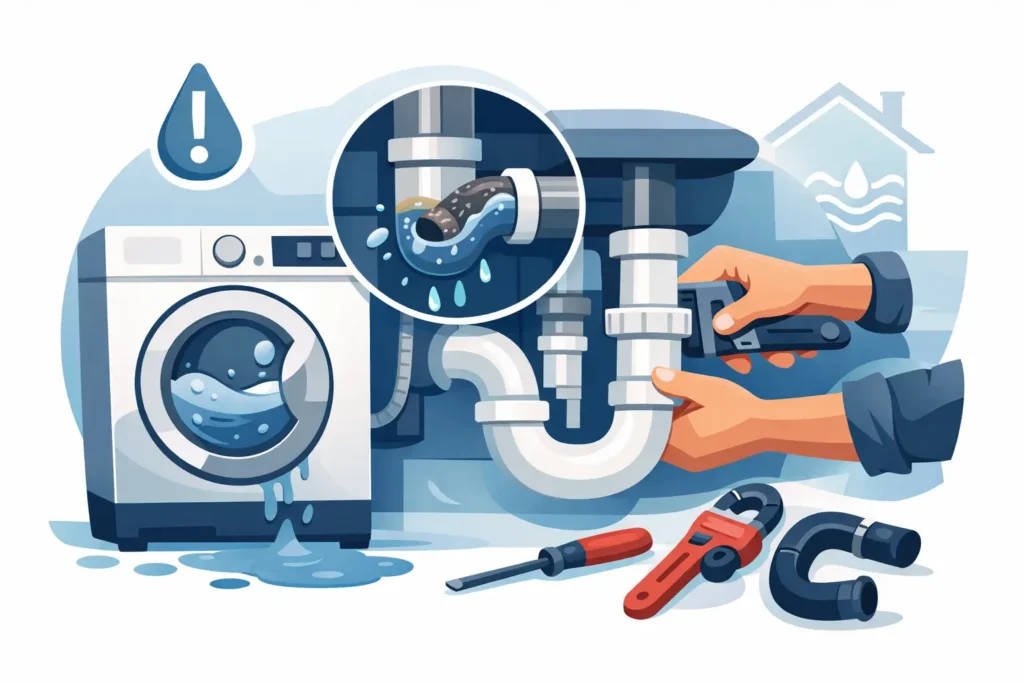
The drain hose carries wash water from the machine to the standpipe or laundry sink. If the hose is bent behind the washer, flattened when the appliance was pushed back, or installed too far down the drain pipe, water may not move out correctly.
Pull the washer forward carefully and inspect the visible hose. It should not be pinched, sharply bent, or sitting loose on the floor. The hose also needs an air gap at the standpipe. When it is sealed too tightly or inserted too deeply, the washer can siphon water back into the machine or drain inconsistently.
A clogged drain pump filter or pump
Small items have a way of escaping pockets. Coins, bobby pins, pet hair, lint, socks, and fabric debris can collect in a washer’s drain filter or jam the pump impeller. Front-load washers commonly have an accessible pump filter behind a lower front panel, although the location and procedure vary by brand and model.
Before opening a filter, place towels and a shallow pan nearby. There may be several gallons of water inside. Check your owner’s manual for the correct process, since forcing a filter cap or removing the wrong panel can create an avoidable leak.
A humming washer not draining often suggests the pump is receiving power but cannot move water. That can happen because of a blockage, but it can also mean the pump motor has failed. A technician can test the pump and determine whether cleaning or replacement is the right repair.
A blockage in the household drain line
If water rises out of the standpipe, spills from a laundry sink, or drains slowly even when the washer is off, the issue may be in the home’s drain line. Lint, detergent residue, and ordinary buildup can restrict the pipe over time. In some homes, a larger plumbing blockage may affect nearby fixtures as well.
if the washer not draining drain. Stop using it until the backup is addressed, especially if wastewater is reaching the floor. If the standpipe is overflowing, a plumber may be needed to clear the line before an appliance technician can verify the washer is draining normally.
Too much detergent or the wrong detergent
Excess soap can create heavy suds that interfere with draining and spinning. This is particularly common when regular detergent is used in a high-efficiency washer, or when more detergent is added because clothing seems extra dirty. More soap does not mean cleaner clothes. It can leave residue in the tub, hoses, and pump system.
Use only high-efficiency detergent in an HE washer, and follow the amount listed for your water hardness and load size. If you see persistent suds, run a rinse and spin cycle with no added detergent after the underlying drainage issue has been checked.
A faulty lid switch, door lock, or control issue
Top-load washers typically will not spin or drain properly if the lid switch does not confirm that the lid is closed. Front-load models rely on a door lock assembly. When one of these parts fails, the washer may pause with water inside even though the pump and hose are clear.
Electronic control boards, wiring connections, and pressure switches can cause similar symptoms. These are not good do-it-yourself repairs for most households because diagnosis requires safe electrical testing and model-specific knowledge. Replacing a part based only on a symptom can add cost without solving the problem.
Safe Checks Before You Schedule Service
There are a few useful checks that do not require taking the washer apart. First, see whether the drain hose is kinked or crushed. Next, look for water backing up from the wall pipe or laundry sink. Then check whether the washer is overloaded with heavy items such as towels, blankets, or bath mats.
If your model has a user-accessible drain filter and you are comfortable following the manual, clean it carefully with towels ready for released water. Remove visible debris, reinstall the cap securely, and run a small rinse and spin test. Stop immediately if you notice leaking, burning smells, unusual grinding, or another overflow.
Avoid chemical drain cleaners in the washer or its hose. They can damage appliance components, create a hazardous splash risk, and complicate a technician’s repair. It is also wise to avoid tipping the washer, removing rear panels, or bypassing a lid or door safety switch.
When a Drain Issue Needs Professional Repair
Call for service when you face a washer not draining after a basic hose check, when it makes grinding or humming noises, or when an error code returns after a reset. Professional diagnosis is also the safer choice if the washer is leaking, the door remains locked, or water has reached electrical outlets or flooring.
For landlords and property managers, a quick response matters even more. A drainage issue can affect a tenant’s routine, damage flooring, and lead to a larger maintenance problem if a backup is ignored. Document the symptoms, including any error code, where water appeared, and whether other drains are slow. That information helps the technician arrive prepared.
Blue Shield Appliance provides in-home washer repair for Washington, DC and the broader DMV area, with same-day or next-day scheduling when availability allows. A vetted technician can inspect the pump, hose routing, filter area, safety switches, and drain operation, then explain the issue and provide an upfront estimate before repair work begins.
Preventing Future Washer Drain Issues
A little routine care can reduce the chance of another laundry-day interruption. Check pockets before every load, particularly children’s clothing and workwear. Wash small items such as baby socks or delicate garments in a mesh bag, and do not overload the drum with bulky items that can shift unevenly.
Use the correct detergent and amount, then run the washer’s cleaning cycle as recommended by the manufacturer. Periodically inspect the drain hose for wear or movement, especially after the machine has been relocated or flooring work has been completed. If your home has an older laundry drain, watch for slow draining before it becomes an overflow.
A working washer should drain quietly and reliably in the background of daily life. When it does not, acting early can protect your floors, clothing, and schedule while keeping a manageable repair from becoming a water-damage problem.