
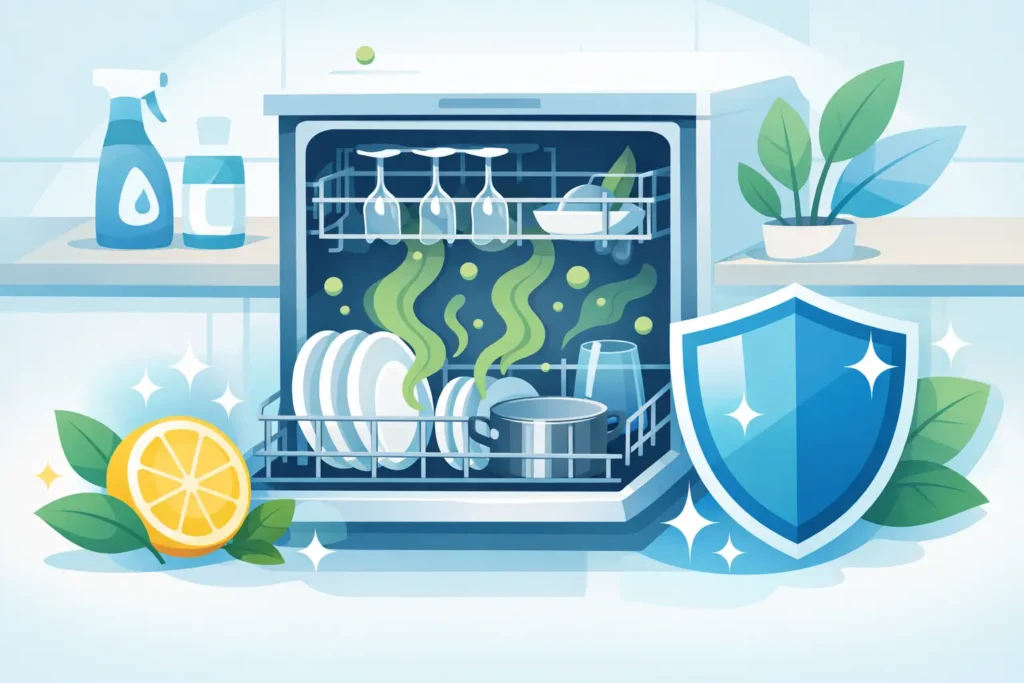
That sour, swampy smell when you open the dishwasher is rarely a sign that the entire machine is ruined. More often, it means food residue, grease, or standing water has found a place to collect. Knowing how to stop Dishwasher Odor starts with cleaning the areas your regular wash cycle cannot fully reach – then checking whether a drainage issue is keeping the smell coming back.
A dishwasher should smell clean or nearly neutral, even after it has been closed overnight. If the odor is strong enough to affect your kitchen, tackle it before residue hardens, a drain line clogs, or dirty water begins backing up into the tub.
Start by finding the source of the smell
Dishwasher Odor usually falls into one of three categories. A sour or mildewy smell often points to damp food particles in the filter, door gasket, or bottom of the tub. A rotten-egg or sewage-like odor can indicate a drainage problem, a dirty garbage disposal, or an issue with the drain hose connection. A burnt or electrical smell is different and deserves immediate attention from a qualified appliance technician.
Before cleaning, pull out the lower rack and inspect the dishwasher floor. Look for pooled water, labels, broken glass, pasta, bones, or pieces of plastic. Even a small amount of debris can trap grease and bacteria, especially in a busy household where the dishwasher runs often.
If you find standing water that does not drain after a cycle, skip the deodorizing steps for now. The underlying problem may be a blocked filter, drain pump issue, kinked hose, or clogged plumbing connection. Cleaning the tub may improve the smell briefly, but it will not solve water that cannot leave the machine.
How to stop Dishwasher Odor with a thorough cleaning
A careful cleaning takes less than an hour of hands-on work and can make a noticeable difference after the next cycle. Always turn off the dishwasher or open the door fully before working inside it.
Clean the filter first
The filter is the most common Dishwasher odor source. It catches food particles so they do not redeposit on dishes, but those particles can decay if the filter is not rinsed regularly.
Most filters sit beneath the lower spray arm and twist or lift out. Check your owner’s manual if it does not release easily. Rinse the filter under warm running water and use a soft brush with a little dish soap to remove greasy buildup. Do not force a sharp tool through the mesh, since a damaged filter can allow debris into the pump area.
While the filter is out, wipe the filter well with a damp cloth. Remove any loose debris you can safely reach. If water remains in that area, absorb it with a towel so you can see whether a blockage is present.
Wipe the door seal, edges, and latch area
Food splatter and moisture collect around the rubber gasket and along the lower edge of the door. These hidden areas may develop a musty Dishwasher Odor even when the racks and dishes look clean.
Use a soft cloth dampened with warm water and mild dish soap. Wipe around the entire seal, the bottom lip of the door, the detergent dispenser, and the latch area. Rinse the cloth and wipe again to remove soap residue. If you see black spotting, avoid harsh scrubbing that could tear the gasket. Persistent mold-like growth or a cracked seal may require professional service and replacement.
Check the spray arms and utensil basket
Remove the spray arms only if your model is designed for easy removal. Rinse them and check the small holes for mineral deposits or food particles. A wooden toothpick can loosen visible debris, but avoid enlarging the holes.
Give the utensil basket a quick wash, too. It often holds residue from forks, cooking tools, and small containers. These small cleaning steps matter because odors tend to build in several places at once.
Run a hot cleaning cycle
Once the filter and interior surfaces are clean, run the hottest available cycle with the dishwasher empty. Use a dishwasher cleaner made for your appliance, following the product directions. This is the most reliable option for breaking down grease and mineral buildup inside areas you cannot reach by hand.
If you prefer a pantry method, place one cup of plain white vinegar in a dishwasher-safe bowl on the upper rack and run a hot cycle. Vinegar can help with light odors and film, but it is not a substitute for clearing debris or repairing a drainage problem. Do not mix vinegar with bleach or use both in the same cleaning cycle. Combining cleaning chemicals can create dangerous fumes and can damage appliance components.
After the cycle finishes, open the door for a few minutes. Letting moisture escape helps prevent the warm, damp environment that causes odors to return.
Check the drain and garbage disposal connection
If the smell is more like sewage than old food, look beyond the dishwasher tub. Many dishwashers drain through the garbage disposal. A disposal full of trapped food can send unpleasant odors back toward the dishwasher, particularly when the appliance has not been used for several days.
Run cold water, turn on the disposal, and let it clear any remaining food. Never put your hand inside the disposal. If your dishwasher was recently installed and has never drained properly, the disposal’s dishwasher drain plug may not have been removed. That is a common installation issue a technician can correct.
Also look under the sink for a visibly kinked or sagging dishwasher drain hose. The hose should be installed with a proper high loop or connected through an air gap where required. This arrangement helps prevent dirty sink water from flowing back into the dishwasher. Because drain connections vary by kitchen layout and local code, it is best not to reconfigure plumbing unless you are comfortable with the work.
Avoid pouring chemical drain cleaner into the dishwasher. These products can harm hoses, seals, pumps, and internal metal parts. They also do little to remove the food buildup inside the dishwasher itself.
Prevent dishwasher Odor between deep cleanings
The best prevention routine is simple: remove large food scraps before loading dishes, clean the filter regularly, and do not leave clean dishes sealed inside for days. You do not need to pre-rinse every plate. In fact, modern detergents generally work better when there is a small amount of food soil to break down. Just scrape solids into the trash or disposal first.
For most homes, rinse the filter every two to four weeks. Clean it weekly if you cook frequently, use the dishwasher daily, or notice residue on dishes. Run a dishwasher cleaning cycle about once a month, with more frequent cleaning if your water is hard or your household uses a lot of greasy cookware.
After unloading, leave the door cracked open for a short time when practical. This allows steam and humidity to escape. Check that tall cutting boards, baking sheets, or large pans are not blocking the detergent dispenser or keeping the spray arms from turning. Poor washing performance leaves more residue behind, which can quickly become an odor problem.
Use the right detergent amount for your water conditions and load size. Too much detergent can leave a film that traps grease, while too little may not clean effectively. If dishes are coming out cloudy, gritty, or greasy, the issue may be water temperature, detergent, spray-arm performance, or a worn component rather than cleaning habits alone.
When dishwasher odor needs a repair visit
A recurring smell after cleaning is a good reason to schedule a diagnosis, especially when it comes with drainage trouble or poor cleaning results. Watch for water left in the tub, gurgling near the sink, leaks under the dishwasher, dishes that remain dirty after a normal cycle, or an odor that returns within a day or two.
A technician can inspect the filter housing, pump, drain hose, check valve, disposal connection, and wash system without guesswork. This is particularly helpful for landlords and property managers, since a small drainage issue can become a larger kitchen cleanup if it is ignored between tenants.
For Arlington and DMV households, Blue Shield Appliance can help identify whether the smell is a maintenance issue or a repair that needs prompt attention. You receive a clear explanation of the problem and upfront pricing before repair work begins.
A fresh Dishwasher Odor is not about covering up odors with fragrance. It is about keeping food residue moving out, water draining properly, and moisture from lingering where it does not belong. A clean filter and a quick check after each cycle can keep one of the hardest-working appliances in your kitchen ready for tomorrow’s dishes.