
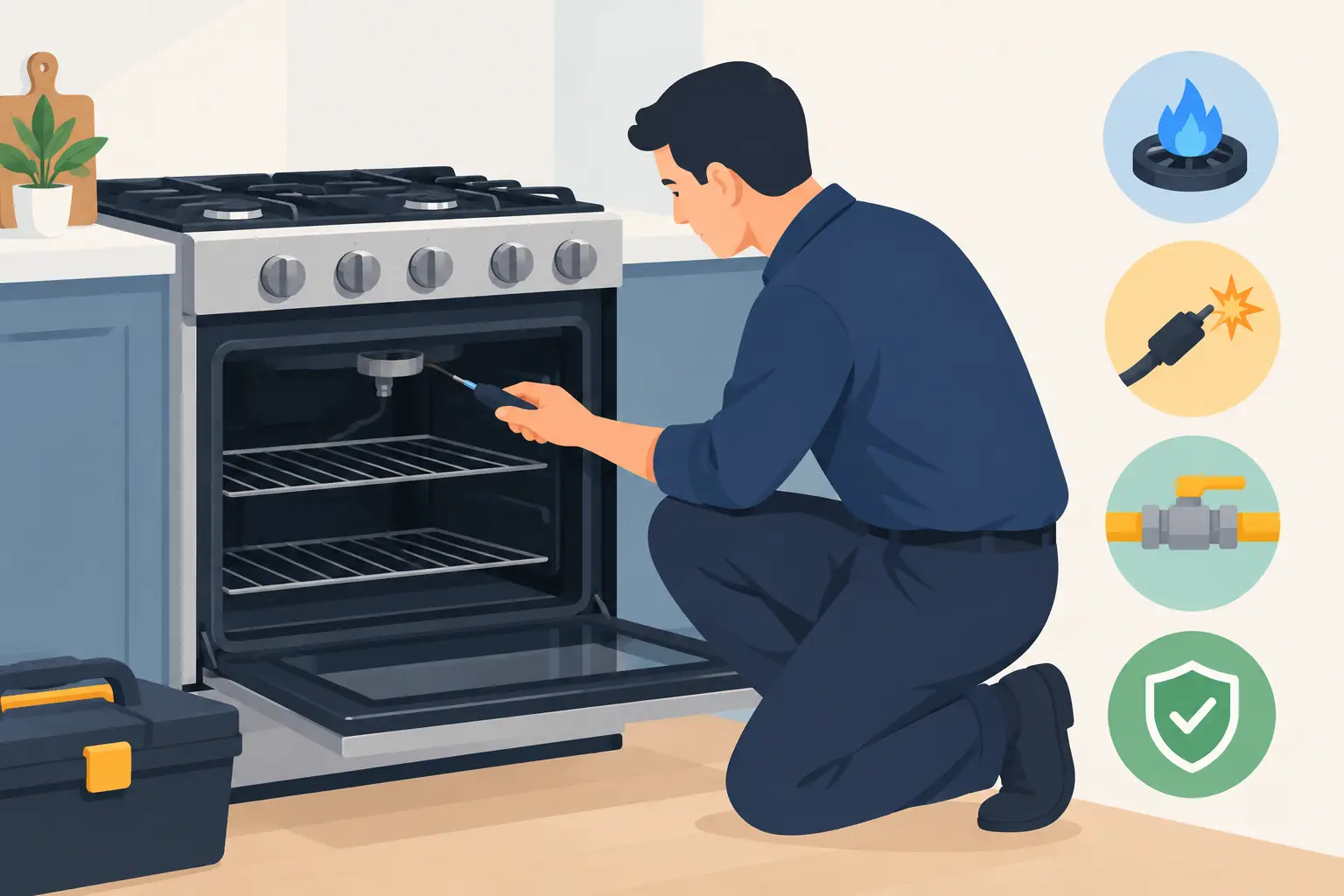
Dinner is planned, the oven is preheating, and then the display flashes an error code, the burner will not ignite, or the temperature never rises. Oven repair becomes urgent quickly because a broken cooking appliance can disrupt family meals, tenant turnover, and a busy week’s routine. The good news is that many oven problems are repairable when they are diagnosed safely and addressed early.
For homeowners, renters, landlords, and property managers in Washington, DC and the surrounding metropolitan area… the right next step depends on what the oven is doing, whether it is electric or gas, and whether there is any safety concern. A few simple checks can help you describe the problem clearly. Beyond that, qualified in-home service is usually the safest path.
Oven Repair Starts With the Symptom
An oven does not need to be completely dead to need service. Small changes in heating, timing, or ignition often point to a failing component that may worsen with continued use. Pay attention to when the problem occurs: during preheating, while baking, when using broil, or only after the oven has been on for a while.
If food is consistently undercooked, overcooked, or browning unevenly, the issue may be a temperature sensor, heating element, igniter, thermostat, control board, or door seal. A technician can test these parts and confirm the actual cause rather than replacing components based on a guess.
An oven that takes much longer than usual to preheat can also need attention. Electric models may have a weak bake element that still produces some heat but cannot bring the cavity to temperature efficiently. On gas models, a weakening igniter is a common reason the gas valve does not open properly or the oven heats slowly.
Other symptoms deserve prompt scheduling: an oven that will not turn on, a broiler that stays on, a display that is blank or unresponsive, clicking that will not stop, a door that will not close, or a burning smell that continues after the appliance has cooled. Error codes are useful, too. Write down the full code and the make and model number before your appointment, if available.
What You Can Safely Check Before Calling
Before arranging oven repair, start with the simple, low-risk checks. Confirm that the appliance has power and that a tripped breaker has not interrupted service. If the display is on but the oven will not heat, try canceling the cooking cycle and setting a new bake temperature. For a gas range, make sure the gas supply has not been shut off.
Check the oven door for food buildup, damaged hinges, or an item blocking it from closing. A door that does not seal can release heat and make cooking temperatures inconsistent. You can also remove loose debris from the oven floor once the appliance is fully cool. Spills can smoke or create odors when the oven heats.
Do not disassemble panels, bypass a door switch, touch wiring, or attempt to test live electrical parts. Heating elements, igniters, capacitors, and control boards can pose shock, burn, or fire risks. DIY videos may make a repair look quick, but appliance models vary significantly, and the wrong replacement part can create a second problem.
For additional guidance on appliance hazards and product recalls, visit the U.S. Consumer Product Safety Commission (CPSC).
If you smell gas, hear a strong hissing sound, or suspect a gas leak, do not try to relight the appliance. Leave the area, avoid switches or open flames, and contact your gas utility or emergency services from a safe location. Gas-related concerns require immediate professional guidance, not troubleshooting inside the home.
Common Problems a Technician Can Diagnose
A proper diagnosis is more than identifying the part that appears damaged. Skilled technicians test the oven’s heating and control systems, inspect connections, and verify that the repair restores normal operation. This matters because one failed component can sometimes be a symptom of a wiring issue or a control failure.
In electric ovens, common repairs include replacing a failed bake or broil element, temperature sensor, thermal fuse, door lock assembly, fan motor, relay, or electronic control board. If an element is visibly blistered, cracked, or sparking, stop using the oven until it is inspected.
In gas ovens, service often involves the bake igniter, gas safety valve, burner assembly, temperature sensor, or control system. A glow igniter can appear orange and still be too weak to open the gas valve reliably. That is why a visual check alone is not enough to determine whether it is working correctly.
For wall ovens and smart ranges, touch controls, communication errors, cooling fans, and software-related controls can add another layer to the diagnosis. A technician who works across major brands can identify the appropriate part and repair approach, no matter where you bought the appliance.
Repair or Replace? Consider the Full Picture
The decision to repair an oven is not always about age alone. A quality range or wall oven may be worth repairing well into its later years when the needed part is available and the overall appliance is in good condition. A straightforward igniter, sensor, heating element, or door repair can often cost far less than replacing and installing a new unit.
Replacement may make more sense if the appliance has repeated major failures, extensive corrosion, unavailable parts, or a costly control-board issue combined with other problems. Built-in wall ovens also require careful consideration because replacement can involve cabinet dimensions, electrical requirements, delivery access, and installation costs.
A transparent estimate gives you the information to decide with confidence. Ask what caused the failure, what part is recommended, whether the repair addresses the full issue, and what to expect after the work is complete. Honest answers are especially valuable for landlords and property managers balancing a quick turnaround with long-term maintenance costs.
What to Expect From Professional Oven Repair
A dependable service visit should reduce stress, not add to it. When you schedule, share the appliance type, brand, symptoms, and any error code. If the oven is in a rental property, make sure the technician can access the home and that an authorized decision-maker is available for estimate approval when needed.
At the appointment, the technician should inspect the appliance, explain the diagnosis in plain language, and provide upfront pricing before beginning approved work. Some repairs can be completed during the initial visit when the right part is available. Others require ordering a specific component, especially for less common models or built-in units. Clear communication about timing helps you plan meals and household routines.
Blue Shield Appliance provides same-day and next-day scheduling whenever availability allows, with vetted, insured technicians who diagnose and repair major household appliances in the home. The goal is simple: help neighbors get back to cooking safely with clear pricing and respectful service.
After a repair, test the oven with a normal preheat cycle and allow enough time for the appliance to reach the selected temperature. If your technician recommends an oven thermometer for verification, use it as directed and keep the oven door closed during the test. Call promptly if the original symptom returns, changes, or is joined by a new error message.
Small Habits That Help Your Oven Last Longer
Preventive care will not stop every electronic or mechanical failure, but it can reduce avoidable strain. Clean spills after the oven cools rather than letting them bake on repeatedly. Avoid lining the oven bottom or racks with foil unless the manufacturer specifically permits it, since foil can block airflow, interfere with heat, or damage surfaces.
Use the self-clean cycle carefully. High-heat cleaning can put added stress on older components, particularly door locks, thermal fuses, and control systems. It may be appropriate for some models, but if your oven is already showing heating or display issues, ask a professional before running it.
Also, avoid slamming the door and keep the door gasket clean and intact. A good seal supports even temperatures and prevents the oven from working harder than necessary. For households that cook often, routine appliance maintenance can catch worn parts before they turn into a no-heat emergency.
A reliable oven keeps more than dinner on schedule. If yours is showing signs of trouble, addressing the issue early can protect your home, your plans, and the meals that bring everyone together.