
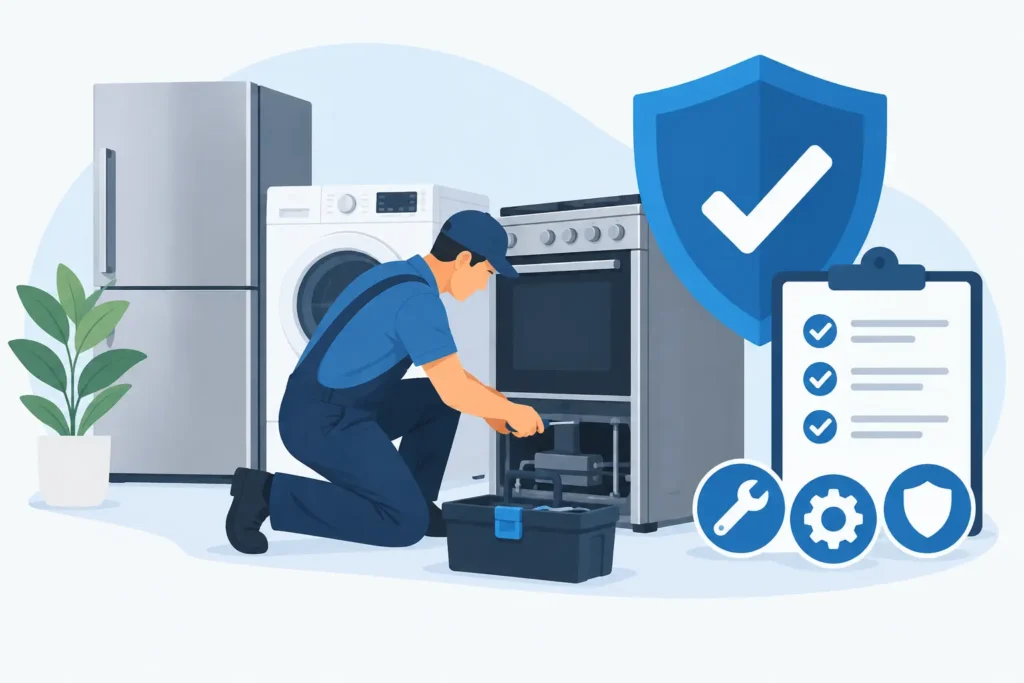
A refrigerator that stops cooling or a washer that will not drain can disrupt the whole household fast. An appliance repair warranty may reduce the cost and stress of getting it fixed, but only if you understand what coverage you have before authorizing service. The details matter: who provides the warranty, what caused the failure, which parts are covered, and whether you must use an approved repair company.
For homeowners, renters, landlords, and property managers in the DMV, the smartest first step is usually not guessing at the problem. It is confirming the warranty terms, documenting the symptoms, and arranging a professional diagnosis before a small issue becomes spoiled food, piles of laundry, or a damaged kitchen floor.
What Is an Appliance Repair Warranty?
An appliance repair warranty is a written promise to pay for certain repair costs during a defined period. It can come from the appliance manufacturer, the retailer where you bought the unit, a home warranty plan, or the repair company that performed a previous service.
These are not all the same. A manufacturer warranty usually applies to defects in materials or workmanship, often for one year after purchase. Some appliance components, such as a refrigerator compressor or dishwasher tub, may have longer limited coverage. A retailer protection plan may add years of coverage and include certain mechanical failures after the manufacturer warranty ends.
A home warranty is different. It is a service contract that may cover eligible appliances in the home for a monthly or annual fee plus a service call fee. Coverage limits, exclusions, and technician assignment rules can vary significantly by plan.
Finally, a repair workmanship warranty applies to a specific repair. If a technician replaces a failed drain pump, for example, the company may warranty the new part, the labor, or both for a stated period. It does not mean unrelated future problems with the appliance are covered.
What an Appliance Repair Warranty Usually Covers
The answer depends on the contract, but most warranty coverage focuses on a covered mechanical or electrical failure that occurs during normal household use. That might include a failed compressor, a defective control board, a broken heating element, a malfunctioning motor, or a replacement part that fails shortly after installation.
Coverage often includes diagnosis, labor, and parts, but do not assume all three are included. Some plans pay for parts but leave the customer responsible for labor. Others cover the repair only up to a dollar limit. A home warranty company may also charge a service fee each time it sends a technician.
Read the paperwork closely for details about the appliance type, age, and installed location. A standard refrigerator in the kitchen may be covered while a garage refrigerator, wine cooler, commercial-style range, or second laundry set is excluded. Built-in units may have different limits than freestanding appliances.
Common exclusions to watch for
An appliance repair warranty does not necessarily cover every reason an appliance can fail. Damage caused by misuse, accidents, pests, fire, flooding, power surges, or poor installation may be excluded. Cosmetic damage is rarely covered, and routine cleaning or maintenance usually falls outside a repair warranty.
Clogs and drainage issues can be especially nuanced. A dishwasher that will not drain because its pump failed may qualify. A dishwasher blocked by food debris, a bent hose, or a household plumbing backup may not. The same is true for a dryer that will not heat because of a defective component versus one restricted by a neglected vent.
Wear items may also be excluded. Filters, light bulbs, knobs, racks, gaskets, and cosmetic panels are commonly treated differently from major functional components. If a warranty plan uses broad language such as “normal wear and tear,” ask the provider how it applies to your exact problem before scheduling service.
How to Use Your Warranty Without Delaying the Repair
When an appliance breaks down, customers understandably want the fastest available appointment. Before booking, take five minutes to check whether warranty authorization is required. Calling a repair company first when your contract requires the warranty provider to dispatch service could leave you paying out of pocket.
Start by finding the appliance model and serial number. On most refrigerators, dishwashers, ranges, washers, and dryers, the information label is inside the door frame, behind a drawer, on the side wall, or at the rear of the unit. Gather the purchase date, receipt if available, plan number, and a clear description of the symptoms.
Then contact the warranty provider and ask direct questions. Confirm whether the appliance is currently covered, whether there is a service fee, whether you can choose your own technician, and whether pre-approval is needed for repairs or replacement parts. Ask about the dollar limit and whether the plan covers diagnosis if the repair is denied.
Document the claim number and the representative’s instructions. If the provider authorizes you to choose a local technician, share that authorization before the visit. A professional technician can diagnose the appliance, explain the failure in plain language, and provide the estimate or documentation needed for the claim process.
Do not take the appliance apart or attempt an electrical repair while waiting. DIY work can create a safety risk and may give a warranty provider a reason to deny coverage. If there is a burning smell, smoke, sparking, a gas odor, or active leaking near electrical connections, turn off the appliance if it is safe to do so and seek prompt professional help.
Repair Warranties: Questions to Ask Before the Work Begins
Even when a manufacturer or home warranty does not apply, an appliance repair warranty can offer meaningful peace of mind. Before approving service, ask what guarantee comes with the repair. Honest, clear answers are a sign that you are working with a company that stands behind its work.
You should understand whether the warranty covers the replacement part, the technician’s labor, or both. Ask how long coverage lasts, when the coverage period begins, and what happens if the same symptom returns. Also clarify whether a follow-up diagnostic fee applies and whether the warranty is transferable if you sell the home or change tenants.
A repair warranty should be specific to the diagnosed issue. For example, replacing a faulty oven igniter does not guarantee that an aging control board will not fail later. That is not a loophole. It is a realistic distinction that protects both the customer and the service provider from confusing one repaired problem with an unrelated failure.
Quality matters here. A lower upfront price can be less valuable if it relies on poor-quality parts, vague terms, or no workmanship guarantee. The best repair decision balances the appliance’s age and condition with the expected life of the repair, the cost of replacement, and the reliability of the service team entering your home.
When Repair Is the Better Choice
A warranty claim does not always mean replacement is the right outcome. Many common appliance issues are repairable, even on units that have been in service for several years. A failed ice maker, washer lid switch, dryer belt, dishwasher circulation pump, range igniter, or refrigerator fan motor may be resolved with a targeted repair.
Repair is often a sensible choice when the appliance is otherwise in good condition, the failure is isolated, and the repair cost is clearly lower than replacing the unit. It can also avoid the added expense of delivery, installation, removal, and possible cabinet or utility modifications.
Replacement may make more sense when an appliance has repeated major failures, critical parts are unavailable, or the repair estimate approaches the cost of a comparable new model. A technician should explain that trade-off honestly. You deserve useful guidance, not pressure to repair or replace before you have the facts.
Protecting Coverage With Simple Maintenance
Warranties are helpful after a breakdown, but preventive care can reduce the chances of needing one. Clean refrigerator coils when accessible, replace water filters on schedule, avoid overloading washers and dryers, clean the dishwasher filter, and keep dryer vents clear. Follow the manufacturer’s instructions for cleaning cycles and approved detergents.
Keep service receipts and records of maintenance, especially for rental properties or multiple-appliance homes. Those records help you track recurring issues, support a warranty claim when documentation is requested, and make better decisions about repair versus replacement.
When a major appliance interrupts your routine, you should not have to sort through coverage language alone. Blue Shield Appliance can diagnose the issue, explain the repair in clear terms, and help you move forward with confidence through same-day or next-day service when available.