
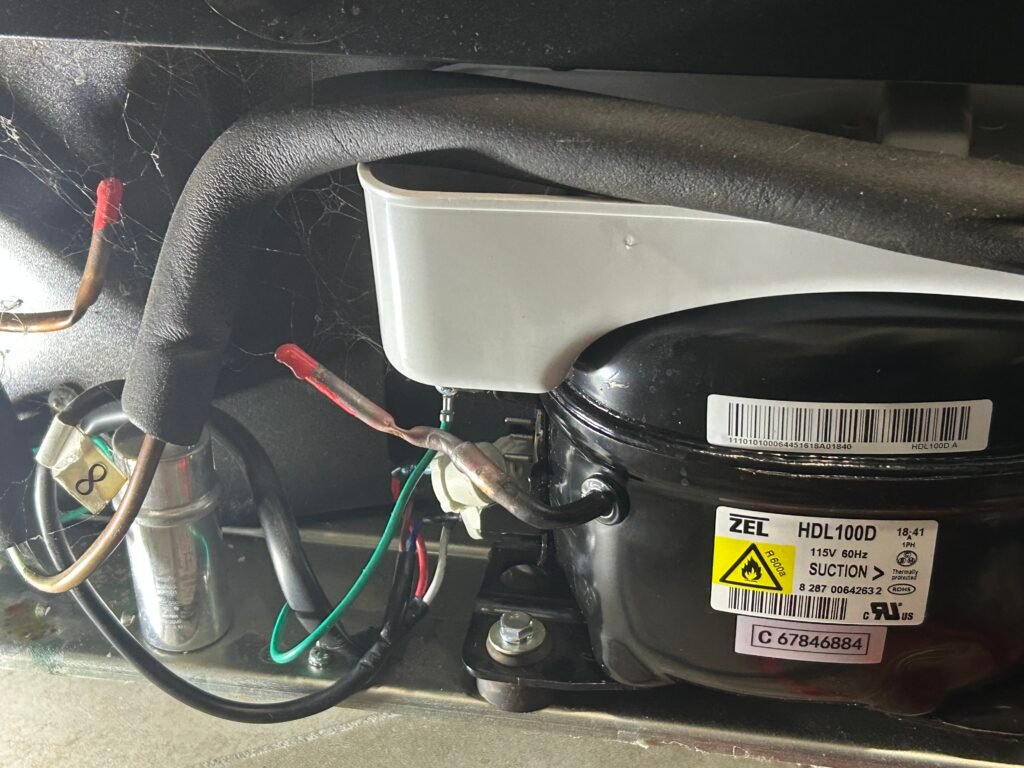
A refrigerator that runs but fails to keep food cold may be showing refrigerator compressor failure signs. These symptoms include unusual clicking noises, excessive heat, and poor cooling. However, other components can cause similar problems, so a professional diagnosis is essential before replacing an expensive compressor.
The compressor is the heart of your refrigerator’s cooling system. It circulates refrigerant through the appliance so heat can be removed from the refrigerator and freezer compartments. When it cannot start, runs poorly, or fails completely, the refrigerator may struggle to cool or stop cooling altogether.
Common Refrigerator Compressor Failure Signs
A failed compressor rarely announces itself with one perfect, unmistakable symptom. Instead, look for a pattern of cooling changes, unusual sounds, and a refrigerator that works harder without delivering cold air.
One common warning sign is a refrigerator or freezer that feels warm even though the control setting has not changed. You may notice that the freezer is no longer keeping ice cream firm, frozen food is softening, or ice production has slowed. In some cases, the refrigerator compartment warms first while the freezer still seems somewhat cold.
Another clue is a repeated clicking sound from the back or bottom of the unit. The compressor may be attempting to start, then shutting off when it cannot run correctly. A humming sound that continues for long periods without proper cooling can also point to a compressor or sealed-system concern.
Touch the outside of the refrigerator carefully near the lower rear area. Some warmth is normal during operation. Excessive heat, especially when paired with poor cooling or frequent clicking, is not something to ignore. Unplug the appliance and arrange service if you smell burning insulation, see damaged wiring, or hear loud electrical buzzing.
You may also see a higher utility bill or notice the refrigerator running almost constantly. A continuously running appliance does not automatically mean the compressor has failed. Dirty condenser coils, poor door seals, blocked vents, a faulty fan, and a defrost issue can all make a refrigerator work overtime. That is why a technician should test the appliance before anyone recommends a major repair.
What to Do When Your Refrigerator Stops Cooling
Start by protecting your food. Keep the doors closed as much as possible to hold in whatever cold air remains. A closed refrigerator can generally keep food cold for about four hours during a power interruption, while a full freezer can hold its temperature longer than a partially filled one. If the refrigerator is clearly warm, move perishable food to a cooler with ice or another working refrigerator as soon as you can.
Next, make a few quick checks that do not require taking the appliance apart. Confirm the refrigerator has power and that the outlet or circuit breaker has not tripped. Check that the temperature controls were not accidentally changed. Make sure containers and food packages are not blocking interior air vents, and inspect the door gaskets for gaps, tears, or a door that will not close fully.
If your refrigerator has exposed condenser coils, usually behind or beneath the appliance, dust buildup can interfere with heat removal. After unplugging the unit, carefully vacuum loose dust from accessible areas. Do not force tools into tight spaces, bend tubing, or remove panels that require disassembly. A simple cleaning can improve performance, but it will not fix a failed compressor, refrigerant leak, or electrical starting problem.
Avoid repeatedly unplugging and restarting the refrigerator in hopes that it will reset itself. If the compressor is having trouble starting, repeated cycling can add stress to electrical components. If cooling does not return after basic checks, schedule an in-home diagnosis promptly.
Problems That Can Look Like a Bad Compressor
Compressor failure is serious, but it should not be assumed based on temperature alone. Refrigerators depend on several components working together, and a qualified diagnosis separates a compressor problem from a repair with a simpler solution.
A faulty start relay or overload protector can prevent a healthy compressor from starting. This is often associated with clicking from the rear of the unit. A failing condenser fan can cause overheating because heat cannot move away from the refrigerator effectively. An evaporator fan problem may leave the freezer cold while the refrigerator section becomes warm because cold air is not circulating where it needs to go.
Defrost-system failures can also imitate a cooling breakdown. If frost builds up behind an interior freezer panel, airflow becomes restricted and the refrigerator compartment may warm. Electronic control boards, temperature sensors, damaged wiring, and refrigerant leaks are other possibilities. Each requires a different repair approach and a different cost discussion.
A trained technician checks temperatures, airflow, electrical components, fan operation, coils, and compressor performance before recommending a solution. This protects you from paying for a major part when the actual problem is elsewhere.
Can a Failed Refrigerator Compressor Be Repaired?
Sometimes the issue is not the compressor itself but the parts that help it start and operate. If testing confirms a bad start device, relay, capacitor, fan, or control component, replacing that part may restore cooling at a more manageable cost.
When the compressor has mechanically or electrically failed, replacement is more involved. The sealed cooling system must be serviced correctly, which may include recovering refrigerant, replacing the compressor, installing appropriate components, evacuating the system, and recharging it to manufacturer specifications. This work requires the right equipment and technical training.
Whether compressor replacement makes sense depends on the refrigerator’s age, brand, condition, size, and warranty coverage. A relatively newer refrigerator with a strong overall condition may be worth repairing, particularly if parts or compressor coverage applies. For an older unit with multiple issues, replacement can be the more practical choice. The right answer is not always the lowest immediate price. It is the option that gives your household reliable cooling without putting more money into a refrigerator near the end of its useful life.
What to Expect From a Professional Diagnosis
A refrigerator technician should do more than identify a warm compartment. They should inspect the appliance, explain what testing shows, and provide clear options before proceeding with a repair. Ask whether the diagnosis points to the compressor itself, a starting component, a fan, a defrost issue, or a sealed-system leak. You should also understand the expected repair cost, part availability, and whether the repair is a sensible investment for the appliance’s condition.
For Arlington homeowners, renters, landlords, and property managers, speed matters when food storage is affected. Blue Shield Appliance provides same-day or next-day scheduling when available, with vetted technicians who diagnose major refrigerator brands no matter where the appliance was purchased. You receive an upfront estimate and a straightforward explanation before repair work begins.
How to Reduce the Risk of Future Cooling Problems
No maintenance routine can prevent every compressor failure, especially as an appliance ages. Still, good habits can help the refrigerator run with less strain. Keep adequate space around the appliance for ventilation, avoid packing food tightly against air vents, and close the doors gently but fully. Clean accessible condenser-coil areas periodically, especially in homes with pets or high dust levels.
Pay attention when a refrigerator starts making new sounds, running longer than usual, forming unusual frost, or producing less ice. These changes do not always mean an emergency, but early service can catch airflow and electrical problems before they become a food-loss situation.
A warm refrigerator is disruptive, but you do not have to guess whether the compressor is to blame. Protect your food, avoid risky do-it-yourself electrical or refrigerant work, and get a clear diagnosis so your kitchen can return to normal as quickly as possible.