
That familiar dryer hum should lead to warm, dry laundry – not a spinning motor and clothes that are still damp an hour later. A worn or broken dryer belt is a common reason a dryer runs without turning the drum. It can interrupt a busy household quickly, especially when laundry is already piled up. Knowing when to replace dryer belt parts can help you avoid repeated cycles, overheated clothes, and a dryer that stops working at the worst possible time.
A dryer belt is a relatively simple component, but it has a big job. It wraps around the drum and connects to the motor and idler pulley, allowing the motor to rotate the drum during a cycle. When the belt loses tension, cracks, slips, or breaks, your dryer cannot tumble clothes as designed.
The clearest signs of a worn dryer belt
A broken belt is not the only possible cause of dryer trouble. Failed drum rollers, a damaged idler pulley, motor problems, and certain door switch issues can create similar symptoms. Still, these signs make the belt a likely suspect and are a good reason to schedule a professional diagnosis.
The dryer runs, but the drum does not turn
This is the most recognizable sign. You may hear the motor running when you start the dryer, yet the drum stays still when you open the door. In many dryers, a broken belt leaves the motor able to run but unable to move the drum.
Do not keep running the appliance to see whether it will “catch” again. Without the drum turning, clothes will not dry correctly, and continued operation can place unnecessary strain on other moving parts.
You hear thumping, squealing, or a slapping sound
A belt that is stretched, frayed, or slipping can make a rhythmic thump or slapping noise as the drum rotates. A high-pitched squeal may point to belt friction, although it can also come from the idler pulley or drum rollers.
Noise alone does not confirm the repair. A technician should inspect the full belt drive system, because replacing only the belt while leaving a worn pulley or roller in place may lead to another service call soon after.
The drum turns inconsistently
If the drum starts slowly, stops briefly, or turns unevenly during a cycle, the belt may be losing its grip. You might also notice that a full load makes the problem worse than a small load. A stretched belt can slip more easily when the drum is carrying wet towels, bedding, or other heavy items.
This is a situation where early repair often makes sense. Waiting until the belt breaks can leave you with a dryer that cannot tumble at all.
Clothes take longer to dry
Long dry times are often caused by restricted venting, so this symptom needs careful diagnosis. But if the dryer is not tumbling steadily, clothes cannot move through the warm air properly. They may come out hot in some spots, damp in others, or badly wrinkled.
Before assuming the belt is the issue, clean the lint screen and make sure the exterior vent flap can open. If airflow is clear but the drum movement seems weak or irregular, have the dryer checked.
You notice a burning-rubber smell
A slipping belt can create friction and a hot rubber odor. Turn the dryer off, unplug it if it is safe to do so, and avoid using it until a qualified technician can inspect it. Burning smells can also come from wiring, lint buildup, or a failing motor, all of which deserve prompt attention.
The belt is visibly cracked or frayed
If you have safely accessed the belt during another repair or inspection, look for cracking, glazing, missing ribs, frayed edges, or a loose fit around the drum. A healthy belt should sit properly in its track and have enough tension to drive the drum without slipping.
It is usually not wise to judge belt condition by appearance alone. The belt may look acceptable but still be stretched beyond its useful range, while the real problem may be the pulley that keeps it tight.
The dryer is older and has heavy use
There is no universal replacement schedule for dryer belts. Some last many years, while others wear out sooner due to frequent laundry loads, large families, overloaded drums, or aging support components. A belt should be replaced based on its condition and performance, not simply because the dryer has reached a certain age.
For landlords and property managers, a dryer that gets daily use between tenants may benefit from preventive inspection. Catching worn moving parts before they fail can prevent an urgent laundry-room outage.
When to replace dryer belt versus repair other parts
The right answer depends on what a technician finds inside the dryer. If the belt has snapped, is clearly damaged, or has lost proper tension, replacement is typically the practical fix. Belts are wear items, and a quality replacement is generally much less expensive than replacing the appliance.
However, the belt is part of a system. The idler pulley maintains tension, drum rollers support the drum, and the motor supplies the rotation. A seized roller or worn pulley can damage a new belt prematurely. That is why a complete inspection matters more than a quick part swap.
A professional should also consider the appliance’s overall condition. If an older dryer has a broken belt plus a failing motor, poor airflow, multiple worn rollers, and electrical concerns, it may be worth comparing the repair estimate with replacement options. Honest advice should account for safety, expected reliability, and the cost of repeated repairs – not just whether one part can be changed.
What causes dryer belts to wear out?
Normal use is the leading cause. The belt flexes every time the dryer runs, and years of heat and movement eventually weaken the rubber. Heavy loads speed up the process because they require more force to turn the drum.
Overloading is especially hard on the belt drive system. A dryer needs room for clothes to tumble. Packing in bulky bedding, several towels, or too many garments can strain the belt, rollers, and motor while also extending drying time.
Worn rollers and pulleys are another common contributor. When these components stop moving smoothly, the belt must work harder and may rub or slip. Lint accumulation inside the cabinet can also interfere with mechanical parts and add to fire risk, which is one reason dryer maintenance should not focus only on the lint screen.
Can you replace a dryer belt yourself?
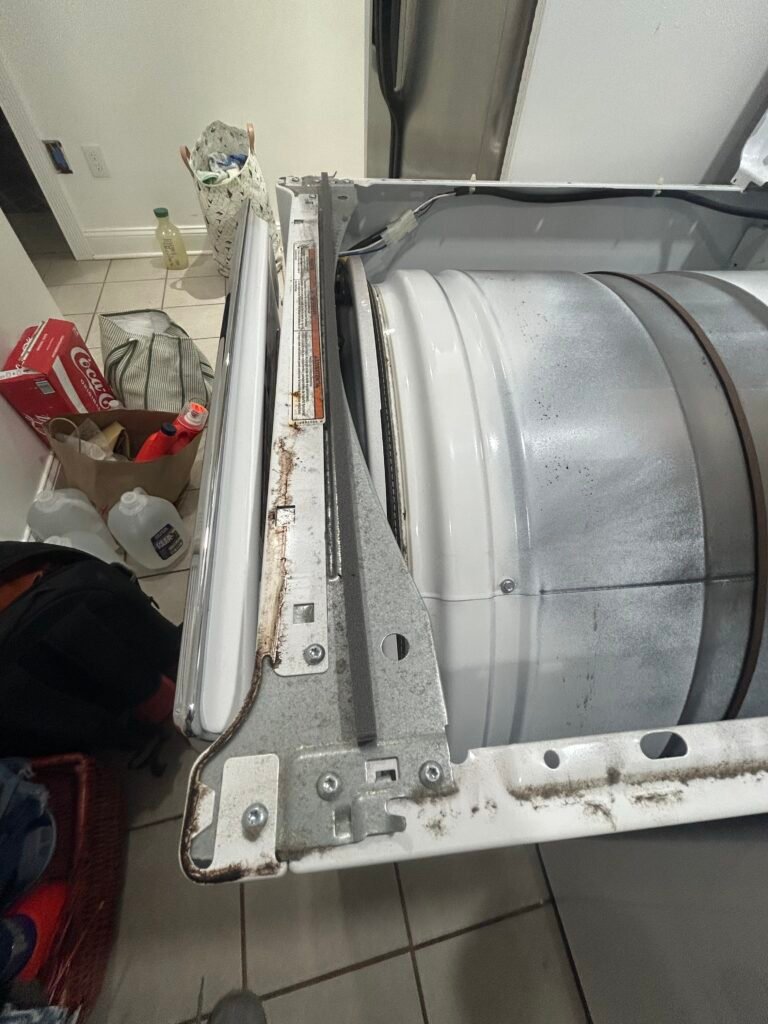
Some homeowners are comfortable with appliance repairs, but dryer belt replacement is more involved than it first appears. Accessing the belt may require removing the top panel, front panel, drum, and other components. The belt must be routed correctly around the motor pulley and idler pulley, and the dryer needs to be reassembled without damaging wires, seals, or panels.
There are also meaningful differences among dryer brands and models. A belt that looks similar may not fit correctly, and an incorrect routing pattern can prevent the drum from turning. Electric dryers should be unplugged before service. Gas dryers require additional caution around the gas connection and should generally be handled by a trained professional.
For many DMV households, the trade-off is simple: a do-it-yourself attempt may save money only if the diagnosis is correct, the right part is on hand, and the repair goes smoothly. Professional service provides a clear diagnosis, proper part matching, and the chance to identify worn pulleys, rollers, or venting concerns before they become bigger problems.
Protect your dryer before the next breakdown
You cannot prevent every belt failure, but a few habits reduce strain. Avoid overfilling the drum, clean the lint screen after every load, and address new noises before they become constant. If drying times increase, have the venting and dryer operation checked rather than running back-to-back cycles to compensate.
Blue Shield Appliance helps Arlington and DMV neighbors get laundry routines moving again with skilled in-home diagnosis, upfront estimates, and quality replacement parts. If your dryer drum has stopped turning, is making new noises, or is taking too long to dry, scheduling service early can keep a small mechanical problem from becoming a full laundry-day disruption.